Showing posts with label backpacking. Show all posts

Thursday, November 6, 2014

Avoid Solar Disappointment This Holiday Season

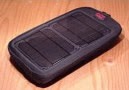
I just completed an important comment on a review I read of the Bushnell SolarWrap Mini on Trailspace. The review lacked performance numbers & prompted me to write a bit more about pocket solar chargers. Here is a link to the review (my comment follows)...
Bushnell SolarWrap Mini Review

The Problem With Pocket Solar Chargers...

In attempting to reduce size, weight, & cost, manufacturers are prone to eliminating performance to any reasonable level.

In brief, I don't recommend any solar charger under 2 Watts (solar cell peak power), and all solar/back-up battery packs should be at least 2500 mAHr.
And, if the product doesn't state these specs clearly, you should smell a rat.

The Explanation...

The typical electronics-equipped trekker is taking a smartphone & camera into the wild. Often, the camera is a dSLR with a larger battery pack than the iPhone. Sometimes there is a need to charge AA or AAA batteries for headlamps or GPS receivers.
Let's run a scenario with the basics: iPhone & dSLR.

The Smartphone's power budget...

The iPhone 6 now packs a battery size of 1800mAHr (up from the iPhone 5's 1500mAhr). The iPhone 6 'plus' is up to the 2900mAHr range. The Samsung Galaxy S5 packs a battery in the 2,800mAHr range these days.
What does this mean?
It will take at least 9 Watt-Hours of power to fully recharge the iPhone 5, and at least 15 Watt-Hours to sully recharge the latest iPhone 6 or Samsung Galaxy S5.

Now the camera...

Most point & shoot camera batteries are in the 1,000 mAHr range, while the bigger dSLR batteries are in the 1800-2000mAHr range. Let's take the case of the popular Canon LP-E6 battery which is used in the 5D, 60D, 7D camera models.
The LP-E6 battery is 1800mAHr @ 7.4V which means it will take at least 18 Watt-Hours to fully charge it.

The other issue is the battery's voltage. Charging a 7.4V battery from a 5V USB source requires a special charger. 12V charger cradles are available, but let's keep the cost & size of the system down by choosing to stay in the USB realm.

Total Power Budget...

Let's assume that you are taking your Canon 5D Mark II camera, and your fancy new iPhone 6 into the bush for a week of trekking. You are planning to drain both the camera each day, but the iPhone should last 2 days.
By the numbers, you will need to replace 18 + 8 = 26 Watt-Hours of power each day. 18 for a full LP-E6, and half of the iPhone 6's 15 WHrs.

Attaching a solar charger to a backpack means less than ideal exposure to the sky (except during stops), so allowing for that, plus occasional tree cover, you would need a solar panel of at least 10 Watts to keep up with your power needs.

A solar storage battery should ideally be twice your anticipated demand, which puts us at 52 Watt-Hours in our example (or 14,000mAHr in a USB battery).

Your Options...

If you look around the market, you'll see PowerMonkey products in the 3-4W range, and Goal Zero in the 3-7 Watt range. These will not keep up with the demands of our scenario. And you can certainly forget the little chinese clamshell chargers in the 0.5-1.5 Watt range!

Look for the components you need...
Waterproof solar panels for kayaking & canoeing. Sensitive thinfilm panels if you are going north or expect tree cover or questionable weather, or crystalline panels if you are at altitude or tropical latitudes. You're not going to purchase a separate system for each (probably), so consider what trekking you plan to do most.
The battery should be thin & light, and able to support all your electronics. Keep it safe & dry. Please don't believe that you can trek properly with an AC inverter... too much added weight, cost, & complexity. Stick to USB or 12V.

What About Just The Smartphone?

If you're considering a gift of solar this holiday season, stick to solar chargers that have a solar panel of at least 2 Watts. This will give you up to 50% of a typical smartphone charge each summer day. That is a level of performance most people can live with. Combine that with an internal boost battery in the same range as the smartphone (2500 mAHr or more), and you will have a satisfied trekker!

Need Any Help?

Send me a note! I can help evaluate any products you are interested in.

Thursday, September 26, 2013

Personal Power for Nepal Trekkers

I just helped Mick Bromley of Wilderness Trekking head off to Nepal on his latest excursion with two sets of portable solar power systems. One is designed to keep a videographer's equipment charged while he chronicles Mick's legendary attention to every aspect of the Nepal experience. The second is for Mick himself, so that he is able to keep his own camera, tablet, and communications gear charged. His system will also come in handy when his clients need a power boost for their own cameras.

Here is an overview of the systems...

For the VideographerSunLINQ 5 Solar Panel with Brunton Sustain2 Storage Battery & LP-E6 DC Charger
The SunLINQ panel folds down small & light, and features CIGS efficient thin film cells that excel in the high-UV exposure at altitude, and at the higher ambient temperatures in the lower regions of the country. The Brunton Sustain is a ruggedized lithium pack that stores 75 Watt-Hours of power... enough for 5 full charges on a Canon dSLR battery, so there is plenty of back-up in case of several days of inclement weather.
The balance is in the logistics. With the panel deployed for several hours each day during stops, or at camp, the power produced will easily offset the power being drawn for camera battery charging & video editing/archiving. The power budget was designed around the need for 2-3 Canon LP-E6 charges per day. Because it is never a good idea to drain a lithium battery below 50% on a regular basis, the videographer will be bringing several battery packs that he will top-off at various times during the day & at camp at night.
Lastly, I do not like the DC input connector provided with the Brunton Sustain2. Too fragile, and introduces a mysterious voltage drop that makes it incompatible with slightly lower voltage panels like the Powerfilm series. So, I sent one of the Modern Outpost Solar Input Cables... a tougher & much longer cable that makes camp set-up options easier.

For Mick : Voltaic Fuse 10W with Ansmann Vario Pro Charger
This is a fantastic solar kit. 10W of premium Bosch crystalline solar cells in a rugged encapsulation, set into a rugged case that can carry a laptop & tablet at the same time. The case features webbing on the back, so strapping it to the outside of a backpack is a simple task. Having all the solar charging gear in one place instead of being spread around with wiring has its advantages too. Mick simply opens the case and connects his camera charger, tablet, phone, radio, or virtually anything else he might need.
The panels produce the power he needs each day, and just in case he runs into bad weather, he has 60 Watt-Hours of power stored in the Fuse10W's internal V60 battery pack.
While laptops, tablets, and USB devices can all be connected directly to the Fuse10's internal battery pack, getting the power from the Fuse10 kit into camera batteries is done via an Ansmann Vario Pro universal charger. Plug the charger into the 12V socket on the Fuse10, snap your camera battery into the cradle, and the charger selects the correct voltage, polarity, and begins charging. It even shows you the state-of-charge so you can better manage your power usage.
Simple. Elegant. Functional. Reliable.

Mick's Client Pick :  Fuse 4W with Pixo Charger
Mick and I talked about an option for his clients, should they want to bring a charger of their own. Something simple to use, simple to pack, rugged, and able to charge virtually any type of camera, phone, iPod, etc. The Voltaic Fuse 4W fits perfectly. 4 Watts of German-made Bosch panels in a small pack that straps to a backpack. Inside is room for small gadgets, & the 4000mAHr solar storage battery, capable of charging or powering everything USB including tablets.
The German Pixo charger is universal, adapting to all 3.6/3.7V camera batteries, plus all 7.2/7.4V dSLR & camcorder batteries (a neat trick not seen in other USB chargers).
This kit is able to offset approx 75% of a dSLR battery every day, or a mix of devices adding up to same.

Well, that's it. Trekking with electronics made easy.
Should you need any further details, or want help with the math concerning your own trekking power needs, please do not hesitate to contact me.

Best!